



Hollow Blow Moulds: Principles, Design and Applications
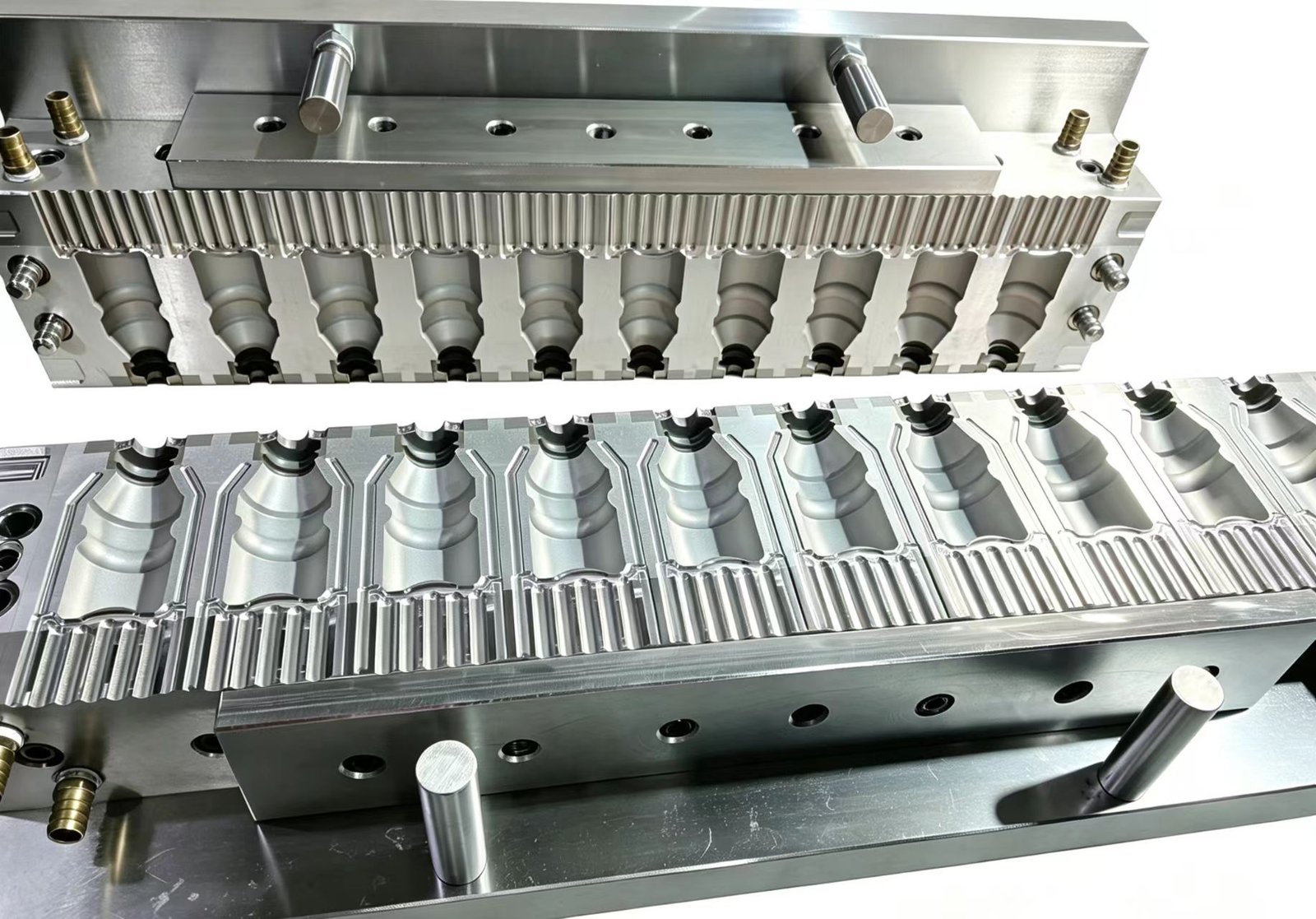
Hollow blow moulds
Hollow blow moulds are specialized forming tools for manufacturing hollow plastic products. They have extensive applications, ranging from small daily-use plastic bottles to large industrial storage tanks.
Working Principle
The hollow blow moulding process works as follows: plastic pellets are heated to a molten state and extruded into a tubular hollow parison. The parison is then placed inside the blow mould cavity. Compressed air is injected to inflate the softened parison, forcing it against the mould’s inner surface. Once cooled and solidified, the mould opens and the finished hollow product is released.
Mould Design & Material Selection
Mould design is critical to final product quality. Engineers need to comprehensively consider product shape, dimensions, wall thickness and other parameters. Heat-resistant and corrosion-resistant special steel is generally selected for mould fabrication to guarantee service life and stable forming performance.
Application Areas
Hollow blow moulds are widely used to produce food packaging bottles, cosmetic containers, daily chemical bottles and industrial storage drums. Ordinary plastic bottles we see every day are typical hollow blow-moulded items.
Industry Trend
With continuous upgrades in manufacturing technology, hollow blow moulds keep evolving. New technologies such as 3D printing are expected to bring transformative changes to mould development and production.
Conclusion
Hollow blow moulds are core equipment in the plastic packaging sector. Understanding its forming principle helps you grasp how hollow containers are produced. This technology will keep innovating and enable more possibilities for packaging container manufacturing in the future.
